When the implications of English as a Lingua Franca (ELF) first hit the consciousness of the ELT community at the beginning of this century, reactions tended to polarize between dogma and denial. On the dogma side were militants who saw native pronunciation models such as received pronunciation (RP) as a residue of colonialism which needed to be uprooted. From the denial point of view, these militants were a noisy distraction who would hopefully tire themselves out and go away. These are caricatures admittedly, but let’s run with them a little… Continue reading “Post-ELF 5: Beyond Dogma and Denial”
PronPack 1-4 has won the 2018 ELTons Award for ‘Innovation in Teacher Resources‘. A judge’s quote says, ‘These books will soon become a must have resource on teacher staff room shelves’. Let it be! Continue reading “PronPack Wins ELTons Award!”
Post ELF series – Article 4. The emerging rainbow beam is the post-ELF idea
In my previous post, I promised to investigate possible implications a post-ELF perspective for pronunciation teaching, and in this post we will consider the question of what features of phonology we should focus on.
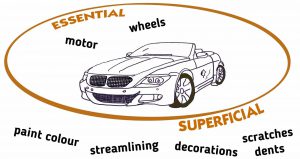
Let me begin with an analogy. If you think of a car, you can probably divide its features into essential and superficial. For example, wheels and a motor are essential (currently, at least). The colour doesn’t matter and is superficial, and the exact body shape probably doesn’t matter much either. There are even features which are accidental such as scratches and dents in the body work.
Post ELF series – Article 3. The emerging rainbow beam is the post-ELF idea
In my last post, article 2 in this series, I suggested that pronunciation teaching post-ELF must distinguish productive and receptive competences, and these will be asymmetrical.
In an English-as-a-lingua-franca speech community, we will pronounce locally and understand globally. The accent or range of accents we can produce will be much smaller than the range of accents we are capable of understanding. Continue reading “Post-ELF 3: A Hierarchy of Pronunciation Skills”
Post ELF series – Article 2. The emerging rainbow beam is the post-ELF idea
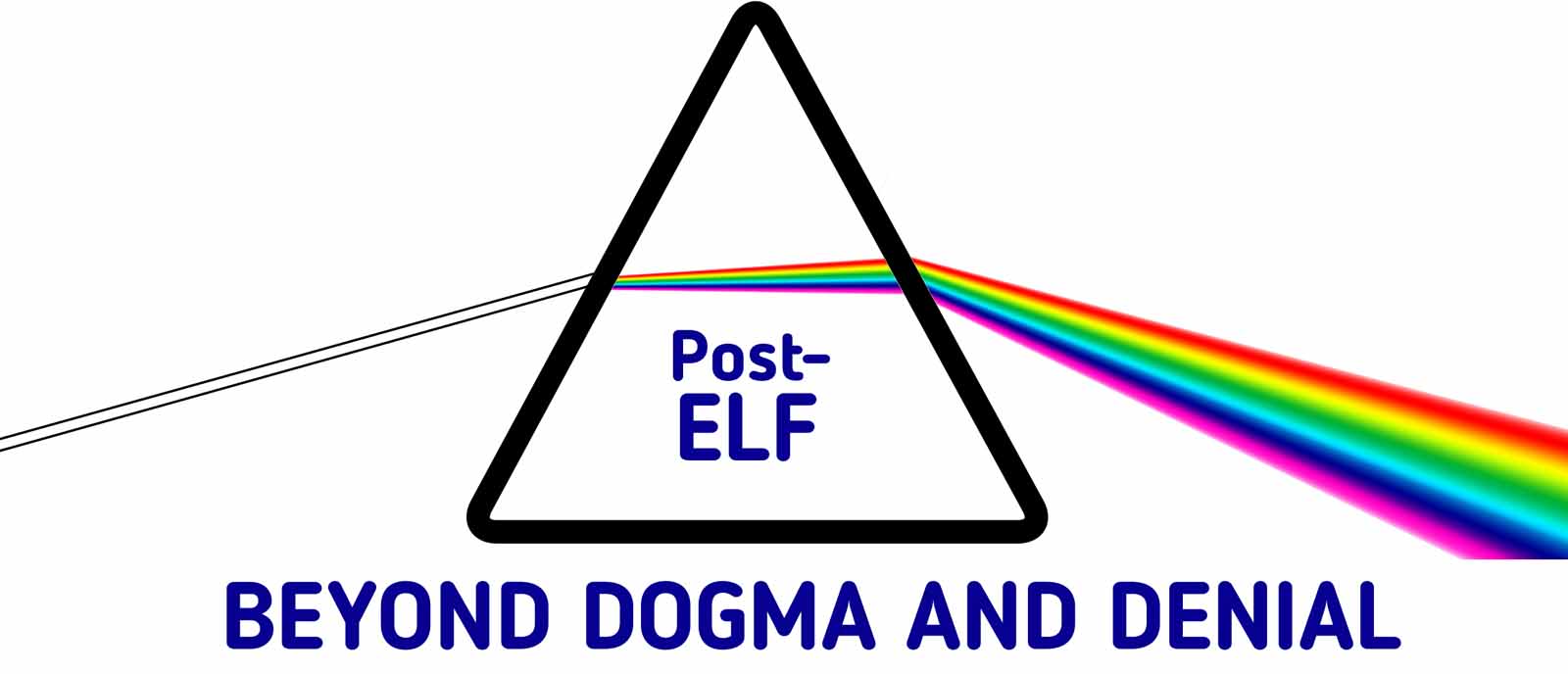
In my first post, article 1 in this series , I suggested that we must take account of the ELF premise – namely, that English is now used as a global lingua franca – when we are thinking about the goals of pronunciation teaching. One broad implication of this premise is suggested by the prism and light metaphor in the image above. The prism represents the ELF premise. In a pre-ELF scenario, our model of pronunciation is like the white beam of light before it enters the prism. It is a single, monolithic model – perhaps RP or General American. The vision is that everybody would learn to speak that way and everybody would come to understand English spoken that way. There was a symmetry therefore between productive and receptive pronunciation. Continue reading “Post-ELF 2: Accent Snobbery”
There are loads of really great pronunciation articles in in the current special edition of The CATESOL Journal (30.1) – click on the link at the bottom of the CATESOL page (they are all free-access).
Check out, for example, the article on the status of word stress in ELF pronunciation teaching by Lewis and Deterding. This remains what Jennifer Jenkins called a ‘grey area’, but after this article, tipping a little more in the direction of ‘yes, do teach it’.
There are also some reviews in the journal, including a review of PronPack from an American perspective by Ellen Rosenfield.
“In Hancock’s latest work, PronPack, he delivers a marvelous collection of classroom-ready online materials for teaching and practicing key features of English pronunciation.”
Post ELF series – Article 1. The emerging rainbow beam is the post-ELF idea
Do you remember the millennium bug? We were all warned that on new year’s day of 2000, our computers would cease to function properly. Didn’t happen. What DID happen around that time however was a quiet but seismic shift in assumptions about the goals of pronunciation teaching.
In the late nineties, people like Brian Jenner were already worrying away at the unchallenged assumption that learners should aim for one of the standard, prestige accents of English such as RP. Jenner (Jenner 1997) pointed out that millions of people were able to make themselves understood in any number of regional or global native accents, so why would we insist on a specific variety? Continue reading “Post-ELF 1: The ELF-Premise”
Putting Vowels On the Map: from article in Modern English Teacher
In this article, I will present and explain a map of the vowel system specifically created to guide the general English language learner. The map is designed with three main aims in mind:
To provide useful insights for the learner.
To support memorable and effective classroom activities.
To be relevant in an international context by being flexible enough to deal with accent variation.


 When the implications of English as a Lingua Franca (ELF) first hit the consciousness of the ELT community at the beginning of this century, reactions tended to polarize between dogma and denial. On the dogma side were militants who saw native pronunciation models such as received pronunciation (RP) as a residue of colonialism which needed to be uprooted. From the denial point of view, these militants were a noisy distraction who would hopefully tire themselves out and go away. These are caricatures admittedly, but let’s run with them a little…