When the implications of English as a Lingua Franca (ELF) first hit the consciousness of the ELT community at the beginning of this century, reactions tended to polarize between dogma and denial. On the dogma side were militants who saw native pronunciation models such as received pronunciation (RP) as a residue of colonialism which needed to be uprooted. From the denial point of view, these militants were a noisy distraction who would hopefully tire themselves out and go away. These are caricatures admittedly, but let’s run with them a little… Continue reading “Post-ELF 5: Beyond Dogma and Denial”
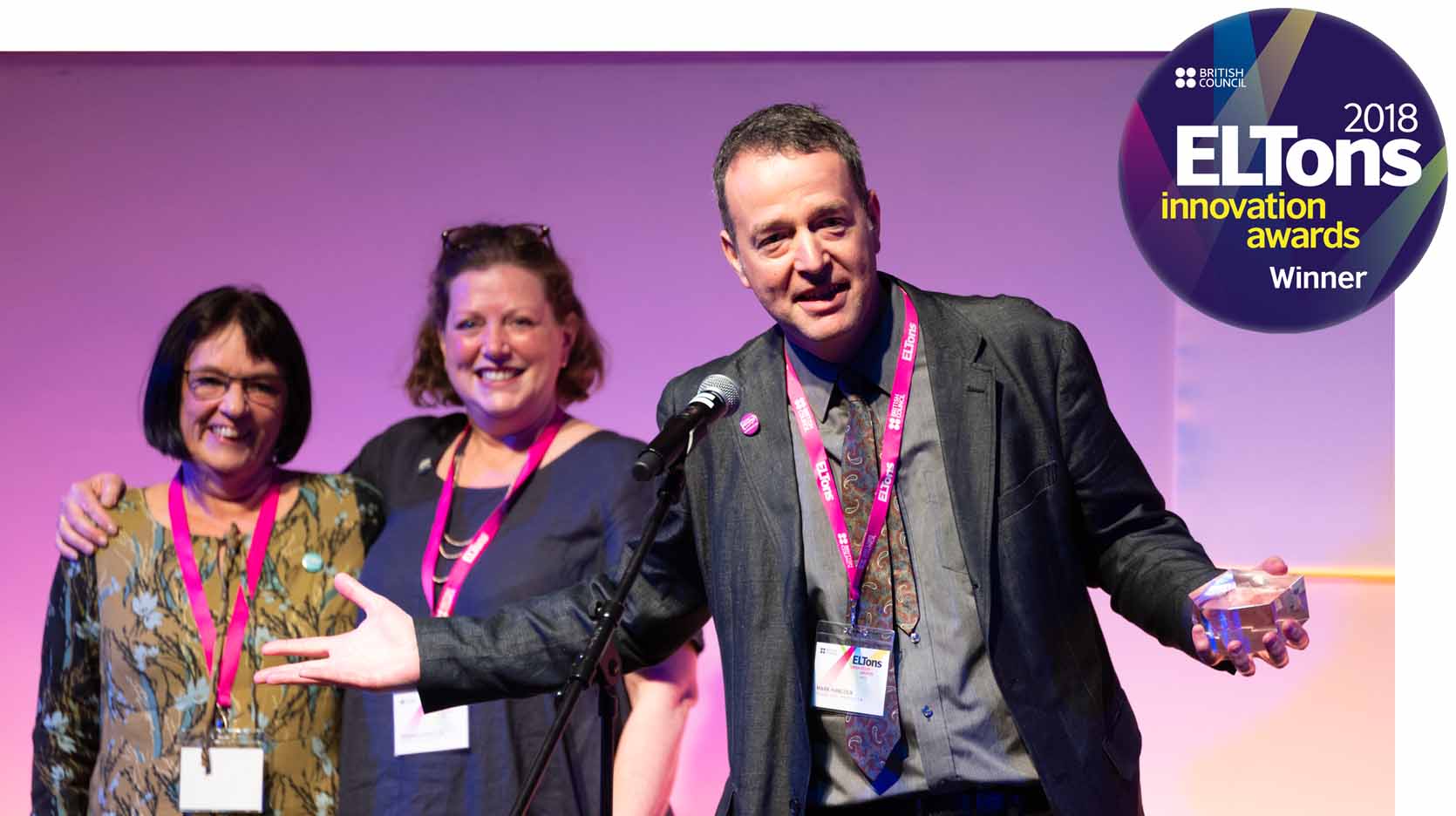
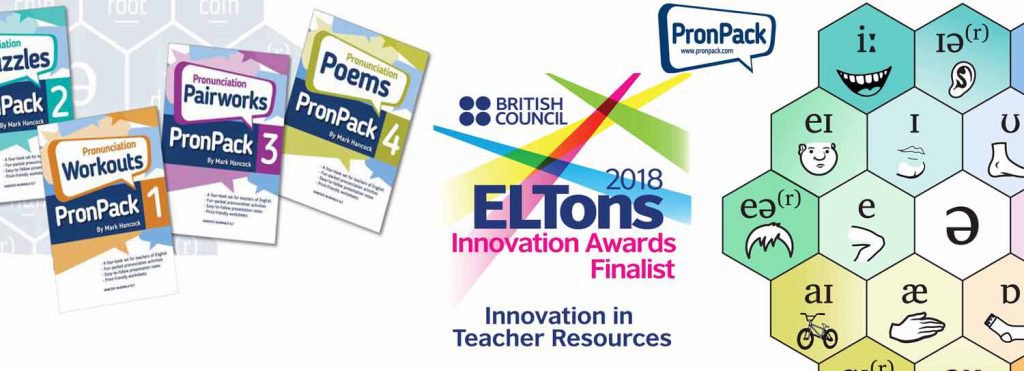
PronPack 1-4 has won the 2018 ELTons Award for ‘Innovation in Teacher Resources‘. A judge’s quote says, ‘These books will soon become a must have resource on teacher staff room shelves’. Let it be! Continue reading “PronPack Wins ELTons Award!”
Post ELF series – Article 4. The emerging rainbow beam is the post-ELF idea
In my previous post, I promised to investigate possible implications a post-ELF perspective for pronunciation teaching, and in this post we will consider the question of what features of phonology we should focus on.
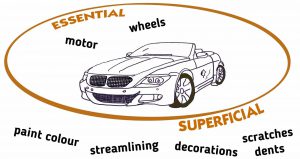
Let me begin with an analogy. If you think of a car, you can probably divide its features into essential and superficial. For example, wheels and a motor are essential (currently, at least). The colour doesn’t matter and is superficial, and the exact body shape probably doesn’t matter much either. There are even features which are accidental such as scratches and dents in the body work.
Post ELF series – Article 3. The emerging rainbow beam is the post-ELF idea
In my last post, article 2 in this series, I suggested that pronunciation teaching post-ELF must distinguish productive and receptive competences, and these will be asymmetrical.
In an English-as-a-lingua-franca speech community, we will pronounce locally and understand globally. The accent or range of accents we can produce will be much smaller than the range of accents we are capable of understanding. Continue reading “Post-ELF 3: A Hierarchy of Pronunciation Skills”
Post ELF series – Article 2. The emerging rainbow beam is the post-ELF idea
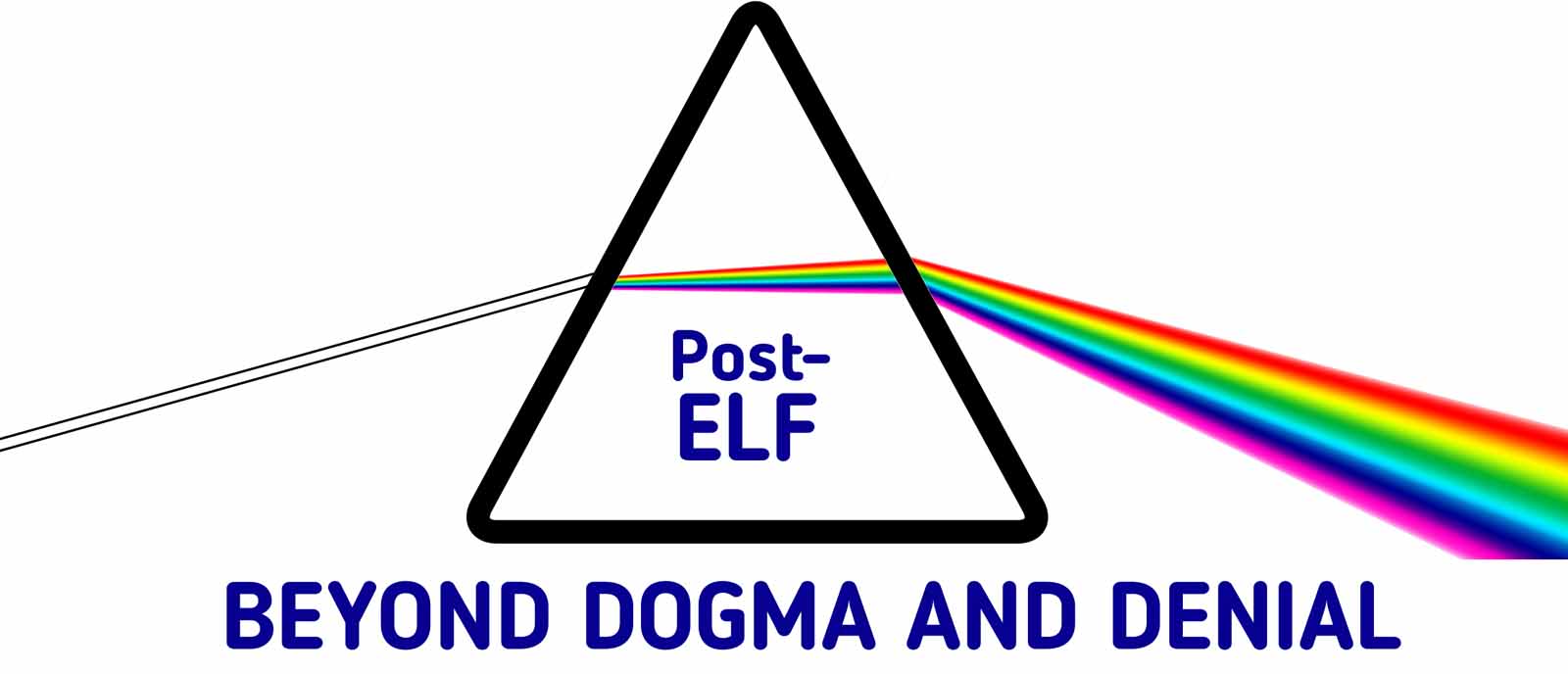
In my first post, article 1 in this series , I suggested that we must take account of the ELF premise – namely, that English is now used as a global lingua franca – when we are thinking about the goals of pronunciation teaching. One broad implication of this premise is suggested by the prism and light metaphor in the image above. The prism represents the ELF premise. In a pre-ELF scenario, our model of pronunciation is like the white beam of light before it enters the prism. It is a single, monolithic model – perhaps RP or General American. The vision is that everybody would learn to speak that way and everybody would come to understand English spoken that way. There was a symmetry therefore between productive and receptive pronunciation. Continue reading “Post-ELF 2: Accent Snobbery”
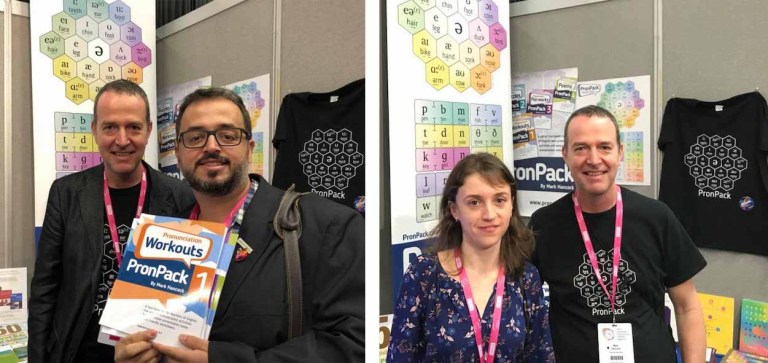
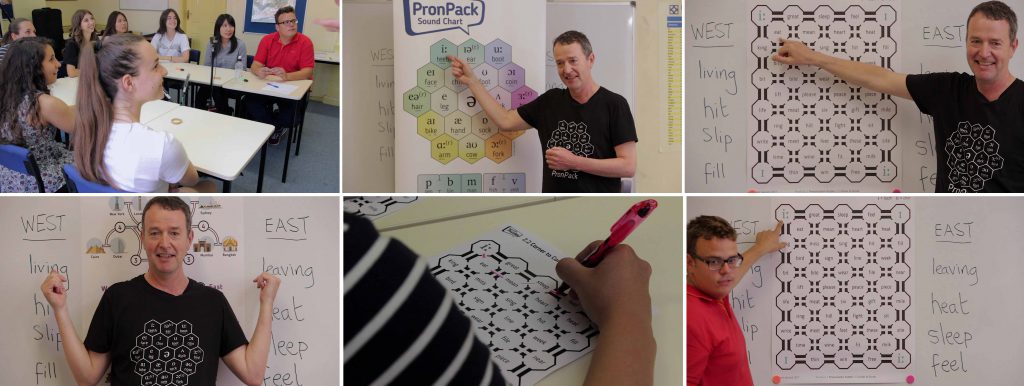
PronPack had an exhibition space at IATEFL 2018 in Brighton, sharing with others in the Independent Writers & Publishers Group. (Many thanks to Rob Howard for his hard work organizing this).
Left, Mark with Higor Cavalcante, right with Oksana Hera at IATEFL Brighton
Here’s Mark with Higor Cavalcante, first customer of the day, who is taking a set of the books back to Brazil. On the right is Oksana Hera from Ukraine, who we owe thanks to for being one of the reviewers of the PronPack manuscript. Continue reading “PronPack at IATEFL Brighton!”
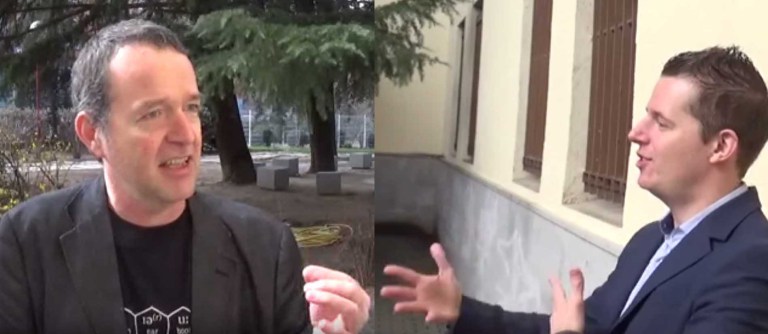
Mark being interviewed by Dirk Lagerwaard for his NovELTies vlog
Being interviewed by Dirk Lagerwaard for his NovELTies vlog : NovELTies EP25: Mark Hancock – Teaching Pronunciation. Among the topics up for discussion is the idea of ‘correctness’ in the context of pronunciation. I suggest that mostly, there’s no such thing as ‘correct’. When people say things like ‘No, it’s not pronounced like that’, they are using a sneaky passive. Not pronounced BY WHO? By what right do these ghostly referees define what is correct and what is not?
Proud and delighted to announce: PronPack 1-4 is a finalist of the 16th British Council ELTons Awards for Innovation in English Language Teaching 2018 in Innovation in Teacher Resources. This publication has been selected as a finalist by a panel of experts from among 110 international products, publications and services as meeting the stringent criteria for innovation and practical application. Read about the other shortlisted books in the Innovation in Teacher Resourcescategory . Continue reading “PronPack Shortlisted for ELTons!”


 When the implications of English as a Lingua Franca (ELF) first hit the consciousness of the ELT community at the beginning of this century, reactions tended to polarize between dogma and denial. On the dogma side were militants who saw native pronunciation models such as received pronunciation (RP) as a residue of colonialism which needed to be uprooted. From the denial point of view, these militants were a noisy distraction who would hopefully tire themselves out and go away. These are caricatures admittedly, but let’s run with them a little…